


Cloud infrastructure has transformed how enterprises build, scale, and compete. But with that transformation comes a challenge most organizations didn’t anticipate: cloud bills that are sprawling, unpredictable, and increasingly difficult to justify to the CFO.
According to Gartner, worldwide public cloud spending is projected to surpass $1 trillion annually, yet studies consistently show that enterprises waste between 25–35% of that spend due to poor visibility and ineffective governance. The problem isn’t the cloud itself. It’s the absence of a disciplined financial management framework built specifically for it.
That’s where Cloud Financial Management comes in.
What Is Cloud Financial Management?
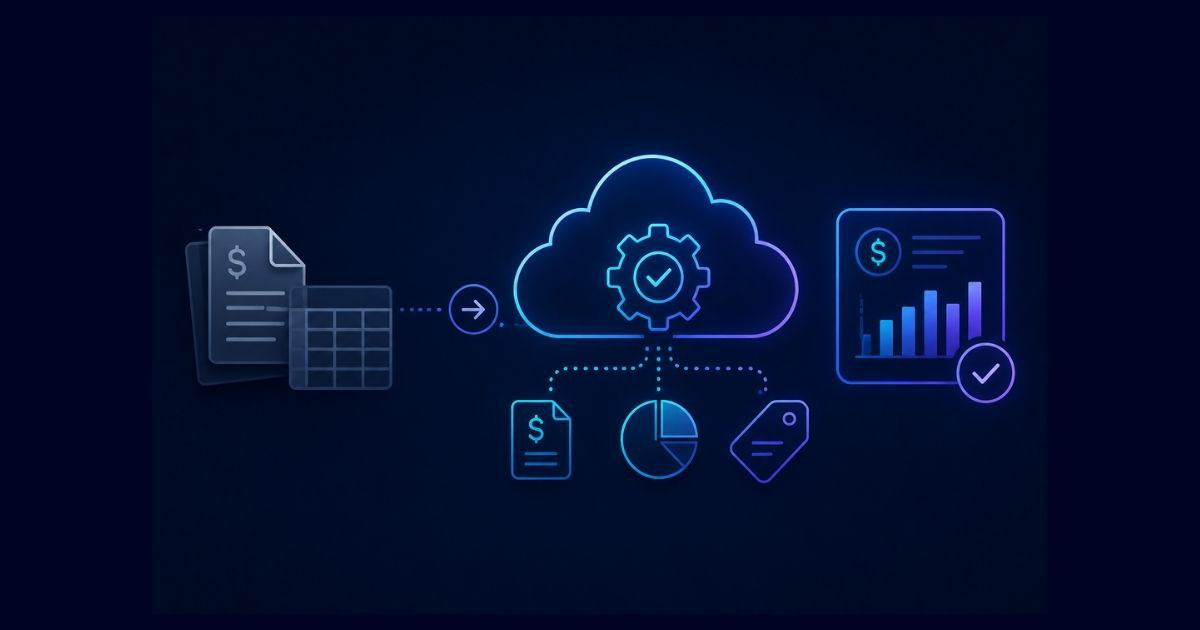
Cloud Financial Management (CFM) is the practice of managing, optimizing, and governing an organization’s cloud expenditure with the same rigor applied to any other business-critical financial function. It sits at the intersection of finance, engineering, and operations, and requires all three to work in concert.
CFM is not simply about cutting costs. It’s about ensuring every dollar spent on cloud infrastructure delivers measurable business value. This means having the visibility to know what you’re spending, the intelligence to understand why, and the governance structures to decide whether it’s justified.
The discipline is built on four interconnected components:
- Cost visibility: real-time, granular insight into where cloud spend is going across teams, services, and environments
- Cost allocation: accurately attributing cloud costs to specific business units, products, or cost centers
- Optimization: identifying and acting on opportunities to reduce waste, right-size resources, and leverage commitment-based pricing like reserved instances or savings plans
- Governance: establishing policies, budgets, and accountability mechanisms that keep spend aligned with business objectives
Together, these components form the foundation of a mature CFM practice.
Why Spreadsheets and Manual Tracking Fall Short
Many enterprises begin their cloud financial management journey with spreadsheets and exported billing reports. It feels manageable at first. Then multi-cloud environments enter the picture. Teams proliferate. Microservices multiply. And suddenly, a monthly billing report becomes a 50,000-row CSV that no one has time to analyze properly.
The fundamental problem with manual tracking is that it’s retrospective. By the time a finance team spots an anomaly in last month’s AWS bill, the spend has already happened. There’s no mechanism to catch a runaway workload in real time, no automated tagging enforcement to ensure resources are properly attributed, and no shared language between the engineering team provisioning infrastructure and the finance team trying to reconcile it.
Manual processes also fail at scale. A single cloud environment with a dozen services is manageable. An enterprise operating across AWS, Azure, GCP, and OCI with hundreds of accounts, thousands of tagged (and untagged) resources, and multiple business units, demands automation rather than spreadsheets.
The answer is a purpose-built cloud financial management platform designed to handle this complexity systematically.
The Four Core Pillars of Cloud Financial Management
Visibility
You cannot manage what you cannot see. Visibility in CFM means more than accessing a billing dashboard. It means having unified, real-time cost data across all cloud providers, accounts, and services in a single pane of glass. It means understanding cost trends, detecting anomalies automatically, and drilling down from an enterprise-level view to an individual resource in seconds.
Strong visibility eliminates the lag between spend and awareness, enabling faster decisions and fewer surprises at month-end.
Allocation
Accurate cost allocation is what transforms cloud spend from a shared IT expense into a business-level conversation. When costs can be reliably attributed to specific teams, products, or customers, engineering leads become accountable owners rather than passive consumers, and finance teams can model unit economics with confidence.
Effective allocation relies heavily on consistent tagging strategies, automated enforcement, and the ability to handle shared costs (like networking or data transfer) through configurable allocation rules.
Optimization
Optimization is the most visible lever in CFM, and the most misunderstood. It’s not about aggressive cost-cutting that compromises performance. It’s about eliminating waste while maintaining the reliability and speed the business depends on.
This includes rightsizing over-provisioned instances, identifying idle or orphaned resources, scheduling non-production environments to shut down overnight, and strategically using reserved instances or savings plans to reduce on-demand pricing. A mature optimization practice is continuous, not a one-time exercise.
Governance
Governance is what makes CFM sustainable. Without it, visibility and optimization are temporary wins that erode as teams grow and cloud environments expand. Governance encompasses budget policies and threshold alerts, approval workflows for high-cost resource types, tagging compliance enforcement, and regular showback or chargeback processes that keep business units aligned with their cloud consumption.
Good governance doesn’t slow engineering teams down. It gives them a clear framework within which they can move fast without financial surprises.
What to Look for in a Cloud Financial Management Platform
Not all cloud cost management platforms are built for enterprise-scale complexity. When evaluating solutions, decision-makers should prioritize the following capabilities:
- Multi- and hybrid-cloud support: native integrations with AWS, Azure, GCP, OCI, Huawei Cloud, VMware in a single platform, without requiring separate tools per provider
- Granular cost allocation: flexible tagging, account hierarchy support, and configurable shared cost distribution
- Anomaly detection: ML-driven alerts that flag unusual spend patterns before they become billing shocks
- Optimization recommendations: actionable, prioritized savings opportunities with estimated impact, not just raw data
- Governance and policy management: budget controls, approval workflows, and automated tagging enforcement built into the platform
- Reporting and showback/chargeback: customizable reports that speak to both engineering and finance stakeholders
- Integration capabilities: connections with existing FinOps tools, ticketing systems, and ITSM workflows
The right cloud financial management software doesn’t just surface data. It drives action. Look for platforms that close the loop between insight and execution.
How Aquila Clouds Simplifies CFM for Enterprises
Aquila Clouds is purpose-built for the realities of modern enterprise cloud environments: multi-cloud, multi-team, and moving fast.
The platform delivers unified cost visibility across AWS, Azure, GCP, OCI, Huawei Cloud, and VMware from a single dashboard, eliminating the need to context-switch between provider consoles or stitch together data manually. Intelligent anomaly detection surfaces cost spikes the moment they emerge, not weeks later on a billing statement.
Aquila Clouds’ allocation engine supports granular tagging strategies and configurable shared cost rules, making showback and chargeback processes straightforward even across complex organizational hierarchies. Optimization recommendations are prioritized by impact, giving engineering and FinOps teams a clear, actionable queue rather than an overwhelming list of suggestions.
Governance features, including budget thresholds, policy-based alerts, and tagging compliance monitoring, ensure that as your cloud environment scales, financial discipline scales with it.
For enterprises ready to move beyond reactive cost management and build a proactive, strategic cloud finance function, Aquila Clouds provides the visibility, control, and intelligence to do it.
Take Control of Your Cloud Finances
Cloud spend complexity isn’t going away, but the right framework and the right platform make it entirely manageable. Cloud Financial Management gives enterprises the structure to turn cloud costs from a liability into a competitive advantage: spending smarter, allocating accurately, and governing with confidence.
See how Andromeda gives you full control over your cloud finances – Book a Demo.