Technology Cost Allocation and Accountability
Every Cloud, Platform, and AI Dollar Mapped to the Business It Serves
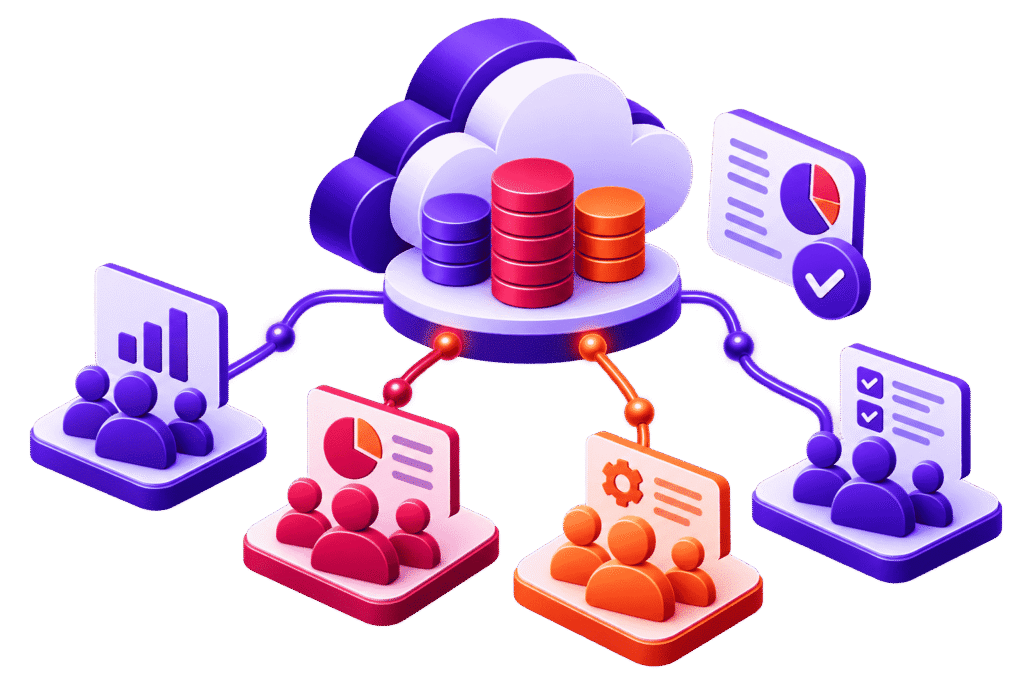
Technology spend arrives organized by vendor, account, and resource. The business is organized by units, products, programs, and P&Ls. Between the two sits a gap that tagging alone can’t close: shared cloud accounts, shared clusters, and AI services used across many teams. Finance can see what the company spends on AWS, Databricks, or Azure OpenAI, but not what a product line, a business unit, or an AI initiative actually costs.
AquilaClouds Andromeda™ maps cloud, platform, and AI spend to the business structure the organization already uses, so every dollar has a business owner and a purpose. This use case is powered by Business AIQ, which draws on cost data from Cloud AIQ, Platform AIQ, and Agentic AIQ under one Andromeda data model and organizes it into financial domains for business-level budgeting, showback, and chargeback. Agent Sherlock, Andromeda’s agentic layer, answers ownership questions in plain language.
Business-structure mapping across cloud, platform, and AI spend
Financial domains for business units, products, programs, and P&Ls
Allocation of shared cloud, platform, and AI costs
AI spend mapped to functions, applications, and use cases
Cost ownership by business owner, not just by account
Business-level showback and chargeback
Business-level budgets and forecasts on allocated spend
Ownership questions answered with Agent Sherlock
Finance-ready and executive-ready allocation reports
Map technology spend to how the business is organized
Cloud bills are organized by account and service; the business is organized by units, products, and P&Ls. Andromeda maps cloud, platform, and AI spend into financial domains that mirror the organization’s own structure. For one leading financial services enterprise, Aquila Clouds mapped about $3M in annual cloud spend to the business structure, showing who owns each cost and what it supports.
Allocate shared costs fairly
Shared accounts, Kubernetes clusters, data warehouses, and AI services are where allocation usually stops. Andromeda distributes shared cloud, platform, and AI costs to the business units and programs that consume them, so no large “shared” bucket is left over for finance to argue about.
Bring AI spend into the same model
AI costs are usually tracked by model deployment, which tells finance nothing about the business. Andromeda maps AI consumption to functions, applications, and business use cases. For one global engineering and construction enterprise, Azure AI Foundry spend is now visible by use case, user, and model, alongside the rest of its technology spend.
Give every cost a business owner
An account owner is not a business owner. Andromeda assigns each allocated cost to the business owner responsible for it, so when spend rises, the conversation happens with the person who can explain it, not with the engineer who happens to hold the account.
Run showback and chargeback at the business level
With financial domains in place, showback and chargeback follow the business, not the cloud provider. Business units see their full technology cost across cloud, platform, and AI, and budgets and forecasts are set on the same allocated spend.
Answer "who owns this?" in seconds
Allocation only builds accountability if people can see it. Through Agent Sherlock, finance and business leaders can ask questions such as “What did the retail lending unit spend on cloud and AI last quarter?” and get the answer with the allocation behind it. Finance-ready and executive-ready reports come from the same data.
Give every technology dollar a business owner.
Accountability starts when spend is organized the way the business is. Andromeda turns cloud, platform, and AI costs into numbers each business unit recognizes and owns.