



Your platform, orchestrated for
performance, security, and cost.
Platform AIQ is the platform orchestration suite within AquilaClouds Andromeda, purpose-built to observe, optimize, and govern VMware, Kubernetes, Databricks, Snowflake, managed databases, containers, and application platforms. One suite. Complete operational visibility. Continuous intelligence.
TRUSTED BY LEADING ORGANISATIONS WORLDWIDE
The AI & Cloud Cost Crisis
Your platform estate runs on two distinct layers.
Most enterprises have no unified visibility across either.
Runtime Platforms
Kubernetes | VMware | EKS | AKS | GKE | ECS
Modern applications increasingly run across Kubernetes, containers, VMware, and cloud-native compute platforms such as EKS, AKS, GKE, and ECS. These runtime platforms provide flexibility and scalability, but introduce a highly dynamic infrastructure layer that is difficult to understand and optimize.
-
Fragmented Visibility
Cost, utilization, and performance data are scattered across platforms and clouds -
Chronic Overprovisioning
Oversized VMs, nodes, clusters, and resource requests drive unnecessary spend -
Inefficient Workload Placement
Poor bin-packing and resource allocation leave expensive capacity underutilized -
Cost Without Application Context
Infrastructure spend is difficult to connect back to applications, workloads, teams, and business owners
Data Platforms
Databricks | Snowflake | AWS RDS | Azure Databases | GCP BigQuery
Modern data workloads increasingly run across Databricks, Snowflake, AWS RDS, Azure Databases, GCP BigQuery, and other managed data services. These platforms accelerate analytics and AI, but their consumption-based models, dynamic workloads, and complex configurations make cost and performance difficult to manage.
-
Fragmented Cost & Performance Visibility
Understand spend and utilization across databases, warehouses, clusters, and clouds -
Unpredictable Consumption
Queries, compute, storage, and data processing can create sudden cost spikes -
Overprovisioned Resources
Oversized clusters, warehouses, and database instances create persistent waste -
Limited Workload Context
Difficult to attribute costs to applications, queries, jobs, teams, and business initiatives
Platform Capabilities
Platform AIQ: Observe. Optimise. Govern.
One intelligence suite. Two platform layers. Complete visibility.
Platform AIQ is one of five modular Intelligence Suites within AquilaClouds Andromeda, powered by the Agentic AI Solution Layer. The only suite built to observe, optimise, and govern both runtime infrastructure and data platforms from a single intelligence layer.
Runtime Platform Cost Observability
See exactly where runtime spend goes across Kubernetes, VMware, and cloud-native environments.
-
Granular Cost Visibility
Track costs by cluster, namespace, node, pod, workload, application, and team -
Shared Cost Allocation
Accurately distribute cluster, infrastructure, and shared-service costs -
Cost Trends & Anomalies
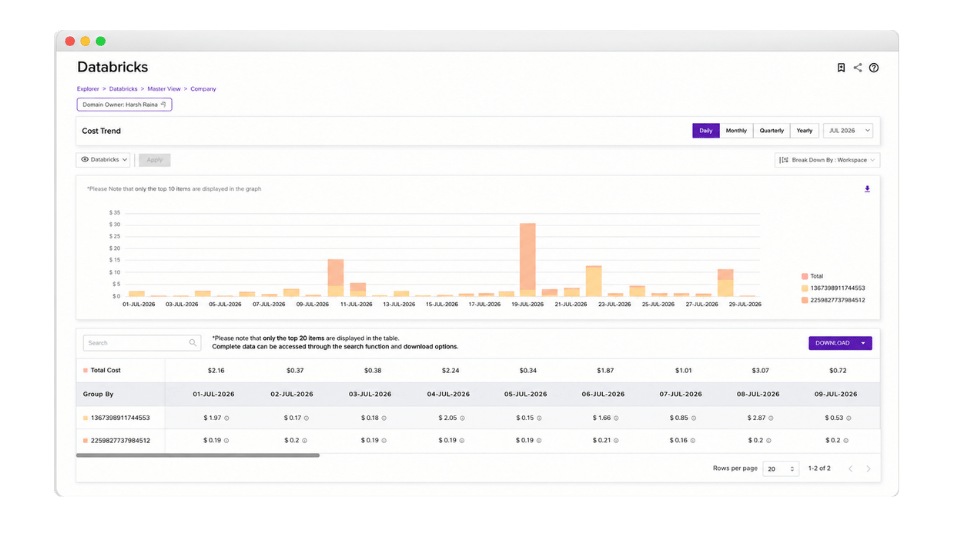
Detect spending spikes, unusual consumption, and emerging cost patterns -
Unit Economics
Understand cost per workload, application, environment, or business service
Runtime Platform Performance & Cost Optimization
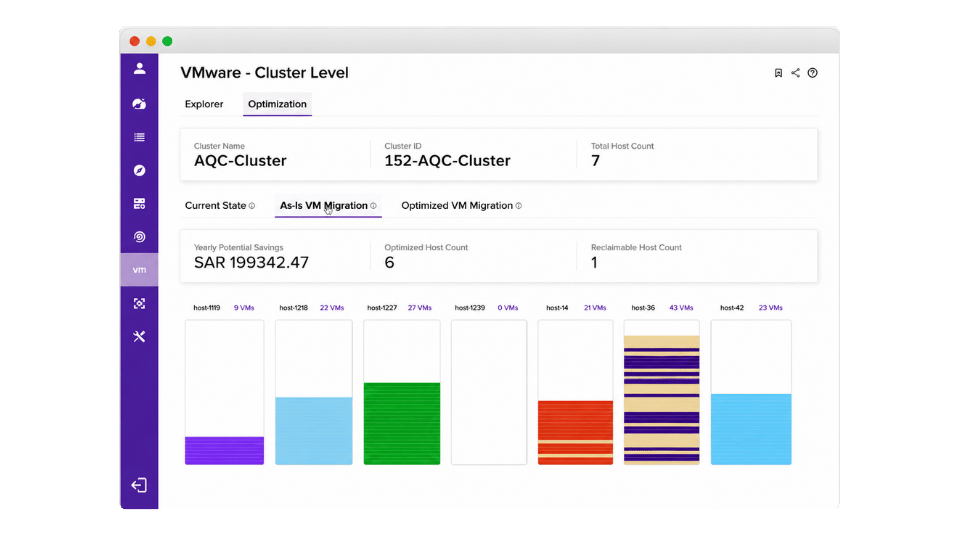
Continuously optimize workload placement, capacity, and resource allocation—balancing savings with application performance.
-
Intelligent Rightsizing
Optimize VM, node, pod, CPU, and memory allocation based on actual utilization -
Bin-Packing & Workload Placement
Consolidate workloads and maximize infrastructure utilization -
Capacity Optimization
Identify idle and underutilized resources and optimize cluster and host capacity -
Performance-Aware Recommendations
Reduce costs while protecting workload performance, availability, and reliability
Data Platform Cost Observability
Understand exactly where spend goes across Databricks, Snowflake, BigQuery, AWS RDS, Azure Databases, and other data platforms.
-
Granular Cost Attribution
Track costs by database, warehouse, cluster, job, query, workload, and team -
Consumption Intelligence
Understand compute, storage, query, and data-processing cost drivers -
Cost Trends & Anomalies
Detect spending spikes, unusual consumption, and emerging cost patterns -
Unit Economics
Connect data platform spend to applications, teams, customers, and business services
Data Platform Performance & Cost Optimization
Continuously optimize data infrastructure and workloads to reduce spend while maintaining performance.
-
Intelligent Rightsizing
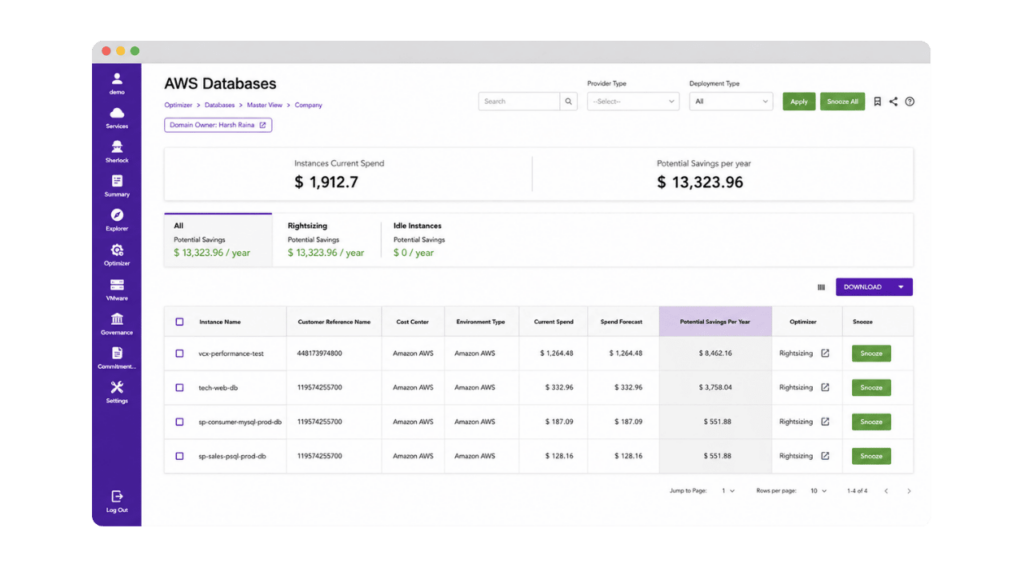
Optimize database instances, warehouses, clusters, and compute capacity -
Workload & Query Optimization
Identify inefficient queries, jobs, and resource-intensive workloads -
Capacity & Utilization Optimization
Eliminate idle capacity and improve compute and storage efficiency -
Performance-Aware Recommendations
Reduce costs while protecting performance, availability, and workload SLAs
Agent Sherlock Integration
Ask plain-language questions about your platform estate across both runtime and data layers, without any dashboard expertise required.
- •Surfaces which clusters, warehouses, pipelines, or workloads are driving cost
- •Identifies anomalies before they compound and recommends specific actions
- •When a Databricks job spikes, Agent Sherlock investigates root cause and acts before the team is aware a problem exists
Real Results
Enterprises that stopped guessing
and started optimizing
Financial Services Enterprise
Kubernetes Optimization
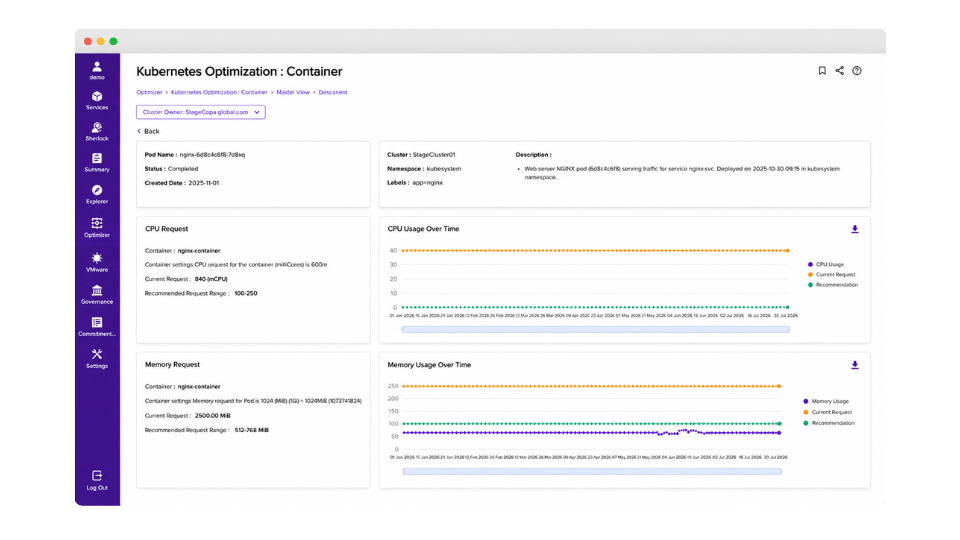
Gained granular Kubernetes cost visibility across clusters, nodes, namespaces, applications, and workloads. Aquila Clouds identified 70 of 71 analyzed pods as over-provisioned, providing utilization-based CPU and memory rightsizing recommendations to turn Kubernetes spend into actionable optimization opportunities.
- Kubernetes
- Runtime Platform
- CPU
Global Engineering & Construction Enterprise
$231K–$294K Annual Savings Identified
Aquila Clouds analyzed Azure database utilization and identified opportunities to rightsize and optimize database tiers, uncovering approximately $29K–$36K in annual database savings. Across the broader cloud environment, Aquila Clouds helped realize approximately $73K in annualized savings and identified $231K–$294K in total annual optimization opportunities, with additional upside from Kubernetes optimization.
- Cloud Cost Governance
- Chargeback & Tagging
- Idle Resource Optimization
