
Kubernetes clusters, VMware estates, managed container services, and data platforms such as Databricks and Snowflake now carry a large and fast-growing share of enterprise technology spend. Their costs are shared, dynamic, and consumption-based, so the cloud bill shows what the infrastructure cost, not which application, team, job, or query used it. Finance sees a total, engineering sees utilization, and nobody sees both in one place.
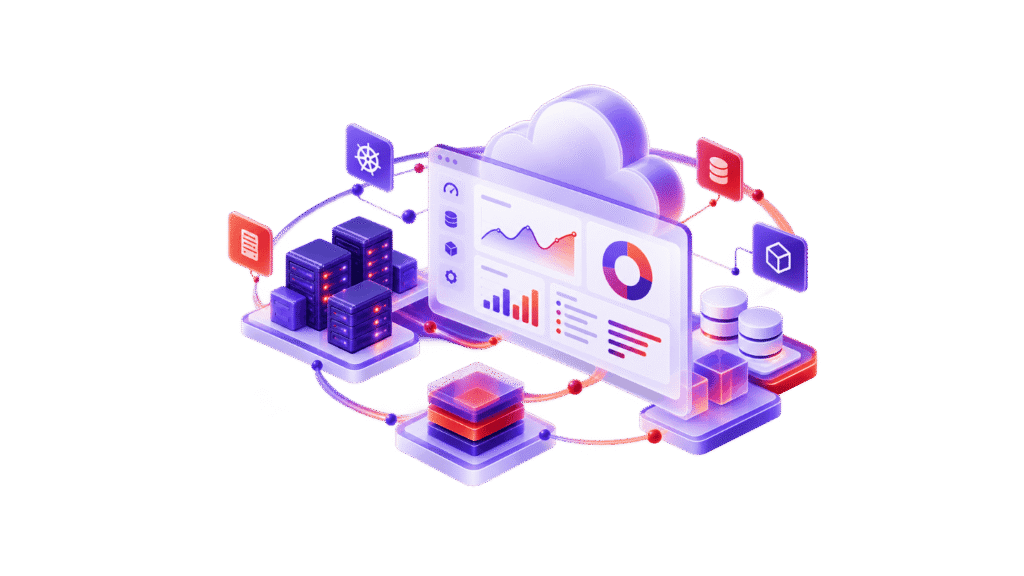
AquilaClouds Andromeda™ brings runtime and data platform costs into a single view, attributing every dollar to the cluster, namespace, workload, warehouse, job, or query behind it, and to the team and business service that owns it. This use case is powered by Platform AIQ, the Intelligence Suite built to observe both platform layers: runtime platforms (Kubernetes, EKS, AKS, GKE, OKE, ECS, and VMware) and data platforms (Databricks, Snowflake, AWS RDS, Azure Databases, and GCP BigQuery), all on one Andromeda data model. Through Agent Sherlock, Andromeda’s agentic layer, that view can be explored in plain language.Kubernetes and container cost visibility by cluster, namespace, node, pod, and workload across EKS, AKS, GKE, OKE, and ECS
VMware cost visibility across ESX clusters, hosts, VMs, and other resources, with virtual resource costs allocated from underlying ESX host costs, including hardware depreciation, licensing, and maintenance
Databricks, Snowflake, and BigQuery cost by warehouse, cluster, job, and query
Managed database cost visibility across AWS RDS and Azure Databases
Compute, storage, query, and data-processing cost driver analysis
Shared cluster, infrastructure, and platform service cost allocation
Cost attribution to applications, teams, and business owners
Unit economics per workload, application, environment, and business service
Platform cost trends, anomaly detection, and plain-language queries with Agent Sherlock
Know what every workload really costs
Cloud invoices stop at the node, the VM, or the warehouse. Andromeda breaks platform spend down to the cluster, namespace, pod, job, and query, so every cost line points to the workload that created it. For one financial services enterprise, this view showed 70 of 71 analyzed Kubernetes pods were over-provisioned, waste that was invisible at the node level.
Split shared platform costs accurately
Shared clusters, platform services, and data warehouses are where chargeback usually breaks down. Andromeda distributes shared infrastructure and service costs to the teams and applications that use them. Finance gets allocations it can report on, and engineering gets numbers it recognizes.
Connect platform spend to business services
Infrastructure cost becomes useful once it is tied to what the business runs. Andromeda maps runtime and data platform spend to applications, teams, customers, and business services. It then calculates unit economics such as cost per workload or per environment, so product and finance teams know what each service costs to run.
Catch cost spikes before the invoice does
Consumption-based platforms can spike overnight: a runaway Databricks job, an inefficient query, or a cluster that scales up and never scales back. Andromeda tracks platform cost trends continuously and flags unusual consumption as it emerges, with the workload context attached. Teams can respond the same day instead of at month-end.
Ask your platform estate questions in plain language
Through Agent Sherlock, Andromeda’s agentic layer, anyone from a platform engineer to a finance lead can explore runtime and data platform costs without writing queries or building dashboards. Ask “Which Snowflake warehouses drove last month’s increase?” or “What does the payments service cost to run on EKS?” and get the answer with the cost drivers behind it.
Turn visibility into optimization
Visibility is the first step, not the last. Because both run on one Andromeda data model, the workloads you find oversized, idle, or inefficient feed straight into performance-aware rightsizing and capacity recommendations. For one global engineering and construction enterprise, Azure database visibility alone surfaced $29K–$36K in annual rightsizing savings.
Give every cluster, warehouse, and job a cost and an owner.
Without workload-level visibility, platform spend stays shared, unowned, and impossible to optimize. Andromeda turns it into accountable, business-aligned cost across both runtime and data platforms.