Platform spend is the hardest line in the technology budget to predict. Kubernetes clusters autoscale, new workloads land on shared infrastructure, and Databricks, Snowflake, and BigQuery bill by the query, job, and compute minute. Budgets set at the start of the year drift within weeks, and most teams only find out at the end of the month, when the invoice arrives.
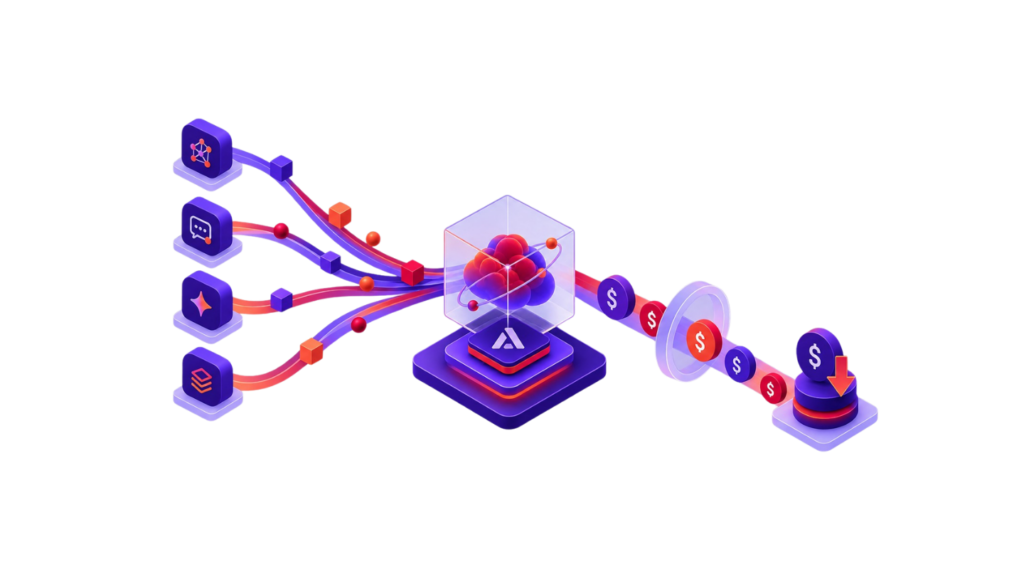
AquilaClouds Andromeda™ forecasts runtime and data platform spend from actual consumption patterns, sets budgets at the level platforms are run, and tracks spend against them continuously. This use case is powered by two Intelligence Suites on one Andromeda data model: Platform AIQ for cost and consumption data across Kubernetes, EKS, AKS, GKE, OKE, ECS, VMware, Databricks, Snowflake, AWS RDS, Azure Databases, and GCP BigQuery, and Business AIQ for scenario modeling and budget planning. Agent Sherlock, Andromeda’s agentic layer, explains what is driving a forecast change in plain language.AI/ML-driven forecasting of runtime and data platform spend
Forecasts by cluster, namespace, warehouse, job, and team
Consumption growth forecasting for Databricks, Snowflake, and BigQuery
Platform budgets by team, application, and cost center
Budget vs. actual vs. forecast tracking for every platform
Budget threshold monitoring and alerts before overruns
Ask Agent Sherlock to flag forecasted budget overruns and explain what’s driving them
Scenario modeling for new workloads, migrations, and growth
Executive-ready platform forecast and budget summaries
Forecast platform spend from how it is actually consumed
Linear projections break on platforms that autoscale and bill by consumption. Andromeda’s machine learning models learn each platform’s usage patterns, including growth, seasonality, and workload cycles, and refine the forecast as new data arrives. Finance and platform teams plan from the same baseline instead of two different spreadsheets.
Forecast at the level platforms are run
A single forecast for “Kubernetes” or “Databricks” doesn’t help anyone manage it. Because Andromeda attributes platform spend to clusters, namespaces, warehouses, jobs, and teams, forecasts break down the same way. Each owner sees where their spend is heading, not just where the total is going.
Know why the forecast changed
A forecast that jumps without explanation erodes trust in the whole process. Through Agent Sherlock, Andromeda’s agentic layer, teams can ask what changed in plain language, such as “Why did next quarter’s Snowflake forecast rise 15%?”, and see the workloads, warehouses, or teams driving the shift.
Set budgets where platform spend happens
Platform costs are shared, so platform budgets usually live at the account level, where no single team owns them. Andromeda sets budgets by team, application, and cost center, built on the same attribution model that splits shared cluster and warehouse costs. Every budget has an owner who can see and act on it.
Catch overruns while there is still time to act
Andromeda tracks actual and forecasted spend against each budget continuously and alerts owners when spend is on track to cross a threshold, not after it has. A runaway Databricks job or an unbounded cluster shows up as a budget risk days before it becomes a month-end surprise.
Plan the next platform investment with confidence
New workloads, migrations to Kubernetes, and expanding data platforms all change the budget. With Business AIQ’s scenario modeling, leaders compare the projected cost of each option before committing, and take forecast-backed numbers into quarterly and annual planning.
Make platform spend as predictable as the rest of the budget.
Consumption-based platforms don’t have to mean surprise invoices. Andromeda gives every platform a forecast, every team a budget, and every overrun an early warning.